About the Workshop
Humanoid robots are rapidly advancing beyond structured environments toward dynamic, real-world athletic tasks, from agile locomotion and acrobatic maneuvers to competitive sports and physically demanding manipulation. Achieving human-level athletic performance demands tight integration of robust perception, real-time decision-making, and whole-body control under high-speed, contact-rich, and unpredictable conditions.
This workshop aims to bring together researchers across robotics, computer vision, reinforcement learning, biomechanics, and sports science to explore the frontiers of athletic humanoid intelligence. We seek to bridge the gap between perception systems that must operate at the speed and precision required for athletic tasks, and decision-making frameworks that can plan and adapt under physical and temporal constraints.
By convening researchers from diverse backgrounds, including vision, deep learning, optimal control, biomechanics, and AI for sports, the workshop seeks to identify open challenges, foster cross-disciplinary collaboration, and chart a roadmap for the next generation of athletic humanoid robots.
Speakers
Confirmed Speakers
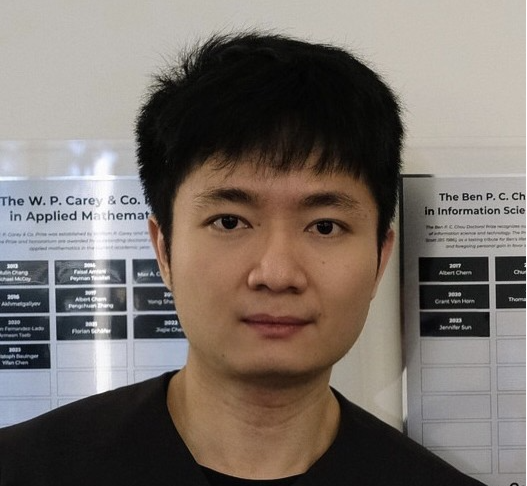
Humanoid robots offer two unique advantages for general-purpose embodied intelligence. First, they are inherently generalist platforms, capable of performing a wide range of tasks in complex, human-centric environments. Second, the close embodiment alignment between humans and humanoids enables the transfer of skills from human data to robotic control.
However, unlike direct teleoperation, learning from off-embodiment human data introduces non-trivial cross-embodiment gaps, particularly at the level of dynamics and actuation. In this talk, we present a general recipe for learning humanoid skills from human data with physics grounding. Human data provides high-level intent and skill structure, while a physics-grounded layer translates them into motor-level actions. This approach enables versatile, adaptive, and robust skill learning across a range of loco-manipulation and dexterous manipulation tasks.

Professor
The University of Texas at Austin
Artificial intelligence (AI) systems now challenge or surpass human experts in many computer games. Physical and real-time sports such as table tennis, however, remain a major open challenge because of their requirements for fast, precise and adversarial interactions near obstacles and at the edge of human reaction time. This talk presents Ace, to our knowledge the first real-world autonomous system competitive with elite human table tennis players. Ace addresses the challenges of physical real-time interaction through a new, high-speed perception system using event-based vision sensors, and a new control system based on model-free reinforcement learning, as well as state-of-the-art high-speed robot hardware. Evaluated in matches against elite and professional players under official competition rules, Ace achieved several victories and demonstrated consistent returns of high-speed, high-spin shots. These results highlight the potential of physical AI agents to perform complex, real-time interactive tasks, suggesting broader applications in domains requiring fast, precise human-robot interaction.

Professor
Johannes Kepler University Linz & University of Alberta
Learning skills on physical robots to solve tasks at human-level performance is a key enabling technology that can revolutionize everyone's lives. Much of today’s research focuses on developing learning algorithms, while designing the robotic body used for execution is often treated as a separate problem. Biological systems, and especially the human anatomy, show that generalization and high performance in difficult tasks are facilitated by the body itself. In this talk, I will illustrate what we have learned over the past years about how we can build robots to run learning algorithms more efficiently and safely.

Research Scientist
Beijing Phybot Technology Co., Ltd
Humanoid robots have achieved impressive capabilities in locomotion and manipulation, yet fast and precise interaction with moving objects remains a major challenge. In this talk, I will present a reinforcement-learning framework for humanoid badminton that learns a unified whole-body policy for footwork, stroke, and targeted shuttle placement. To improve both motion quality and task adaptability, multiple region-specific adversarial motion prior discriminators guide the robot toward different human-inspired striking styles across its reachable workspace. The desired return location is incorporated directly into policy training, allowing the controller to jointly determine how to move, where to strike, which stroke to execute, and where to return the shuttle, without relying on an upper-level planner.
I will also introduce an annealed curriculum that initially uses locomotion-related subtasks to reduce the exploration difficulty of whole-body learning. These auxiliary objectives are gradually annealed away as training progresses, reducing gradient conflicts between locomotion and striking. In addition, I will discuss a prediction-free variant that achieves competitive performance without explicit shuttlecock trajectory prediction, highlighting the potential for more reactive and streamlined dynamic interaction systems. The resulting policy is evaluated in simulation and on a real humanoid, demonstrating dynamic and coordinated whole-body badminton performance.

Our homes, offices and urban surroundings are carefully built to be inhabited by us, humans. Tools and furniture are designed to be easily manipulated by the human hand. Floors and stairs are modeled for human-sized legs. For robots to work seamlessly in our environments they should have bodies that resemble in shape, size and strength to the human body, and use these with the same dexterity and reactivity. This talk will provide an overview of techniques developed at LASA to enable robust, fast and flexible manipulation. Learning is guided by human demonstrations. Robust manipulation is achieved through sampling over distributions of feasible grasps. Smooth exploration leverages on complete tactile sensing coverage and learned variable impedance strategies. Bi-manual coordination offers ways to exploit the entire robot's workspace. Imprecise positioning and sensing is overcome using active compliant strategies, similar to that displayed by humans when facing situations with high uncertainty. The talk will conclude with examples in which robots achieve super-human capabilities for catching fast moving objects with a dexterity that exceeds that displayed by human beings.

Adjunct Professor
Robotics Institute, Carnegie Mellon University
Co-Founder and CEO, MyoLab.AI
CV
Athletic ability in any embodied agent emerges from a three-way trade-off — morphology (what the body can physically generate, absorb, and store), compute (what can be perceived and decided within the available reaction window), and energy (metabolic or battery budget per unit of work).
Evolution did not converge on a single point in this space; it explored the Pareto frontier (cheetah vs. mantis shrimp vs. octopus vs. human distance runner), and each animal's “intelligence” is only meaningful relative to where its body sits on that frontier.
Not hardware design, nor decision making alone — this talk argues that establishing and searching this frontier is the key to unlocking general athletic intelligence.

Organizers
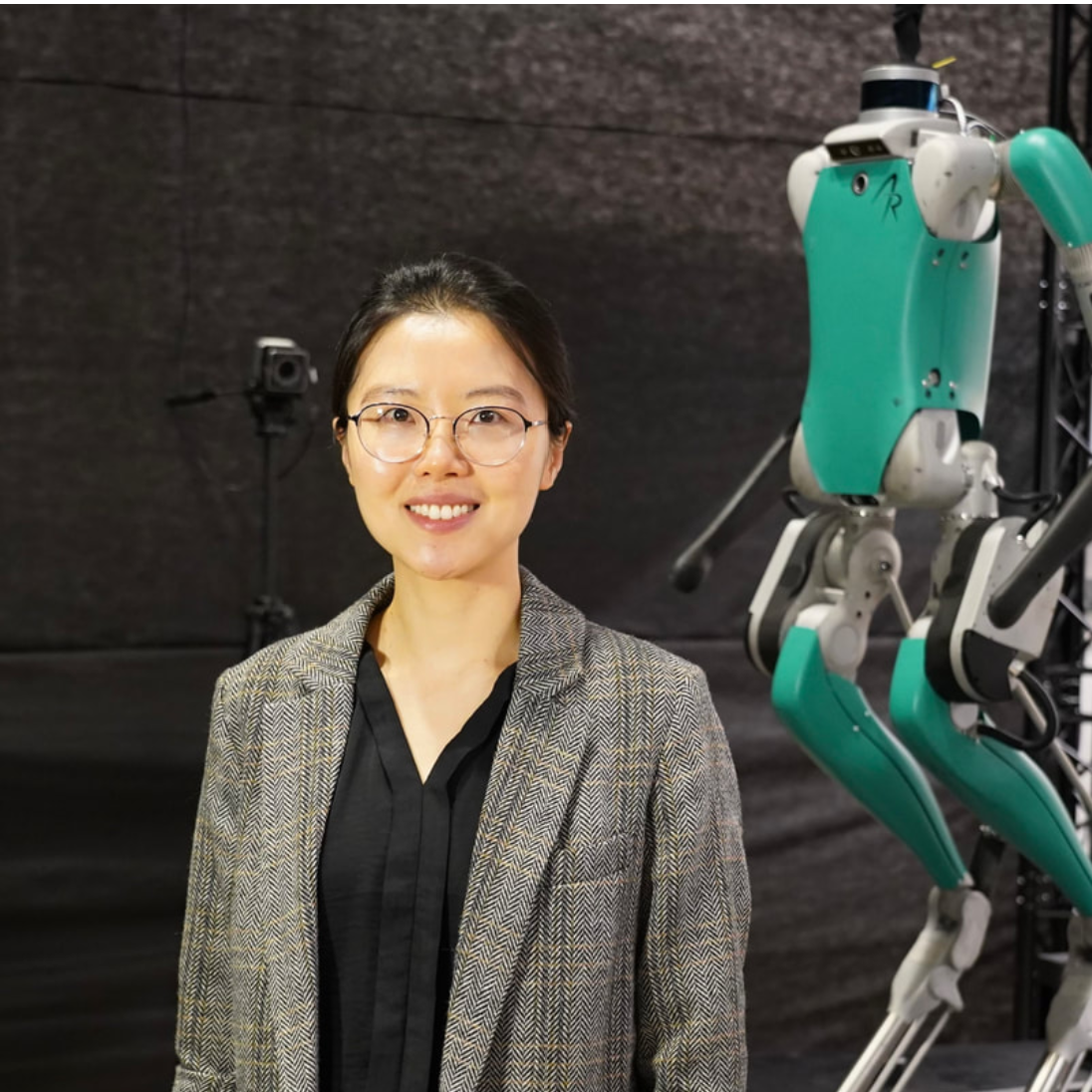 Yan Gu
 I-Chia Chang
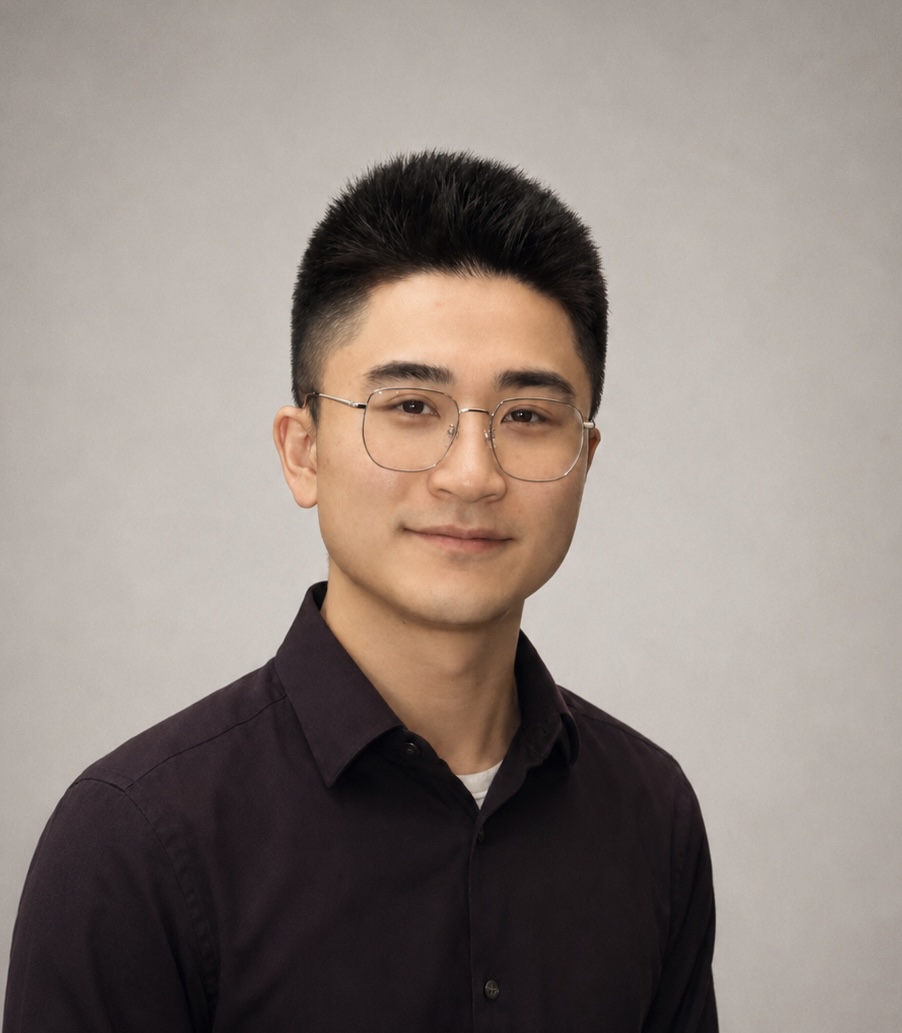 Wenxi Chen
 Wenjing Li
 Muqun Hu
 Ziyun (Claude) Wang
 Jiashun Wang
Call for Papers
We invite submissions on the control, learning, and intelligence of athletic humanoid robots. We welcome original research papers, position papers, and work-in-progress contributions. OpenReview Submission Link
Topics of Interest
Topics include, but are not limited to:
- Perception for agile and dynamic humanoid behaviors
- Real-time decision making and embodied intelligence
- Reinforcement learning for athletic skills and locomotion
- Whole-body control for contact-rich, high-speed motions
- Vision-based learning and sim-to-real transfer
- Humanoid robot sports (e.g., football, badminton, racket sports)
- Biomechanics-inspired methods for humanoid intelligence
- Benchmarking, evaluation, and open challenges for athletic humanoids
Paper type and Important Dates
Paper Types
Authors may submit one of the following:
- Short papers (2–4 pages): Preliminary results, emerging ideas, work in progress, or concise summaries of recently published work.
- Full papers (up to 8 pages): Original research contributions with sufficient technical detail and experimental or theoretical validation.
Important Dates
- Submission deadline:
Aug 24thExtended to Sep 1st, 11:59 PM EDT - Acceptance notification: Sep 10th
All submissions must follow the standard IROS paper format and will undergo peer review. Submissions will be evaluated based on their relevance to the workshop, technical quality and originality, clarity of presentation, soundness of methodology, and the degree to which the claims are supported by theoretical analysis and/or experimental evidence.
This workshop is non-archival, allowing authors to submit work that is under review elsewhere or intended for future publication at conferences or in journals. Accepted papers will be presented at the workshop as spotlight talks or poster presentations.
Live Demo Companies
 Beijing Phybot Technology
Demo: Humanoid Badminton
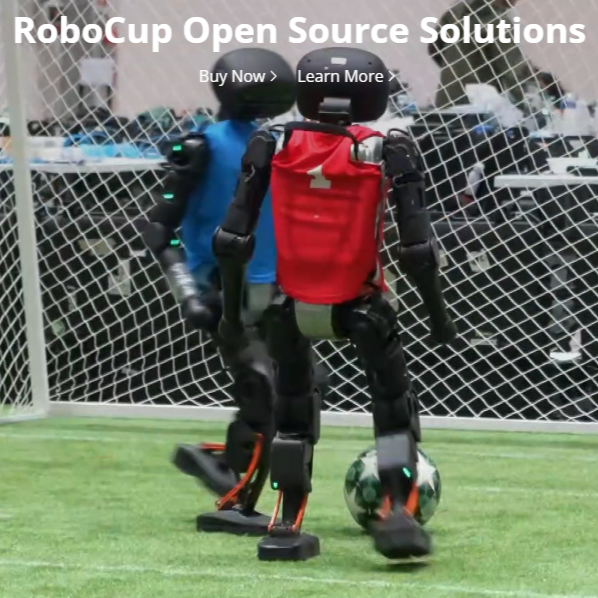 Booster Robotics
Demo: Dancing / Football
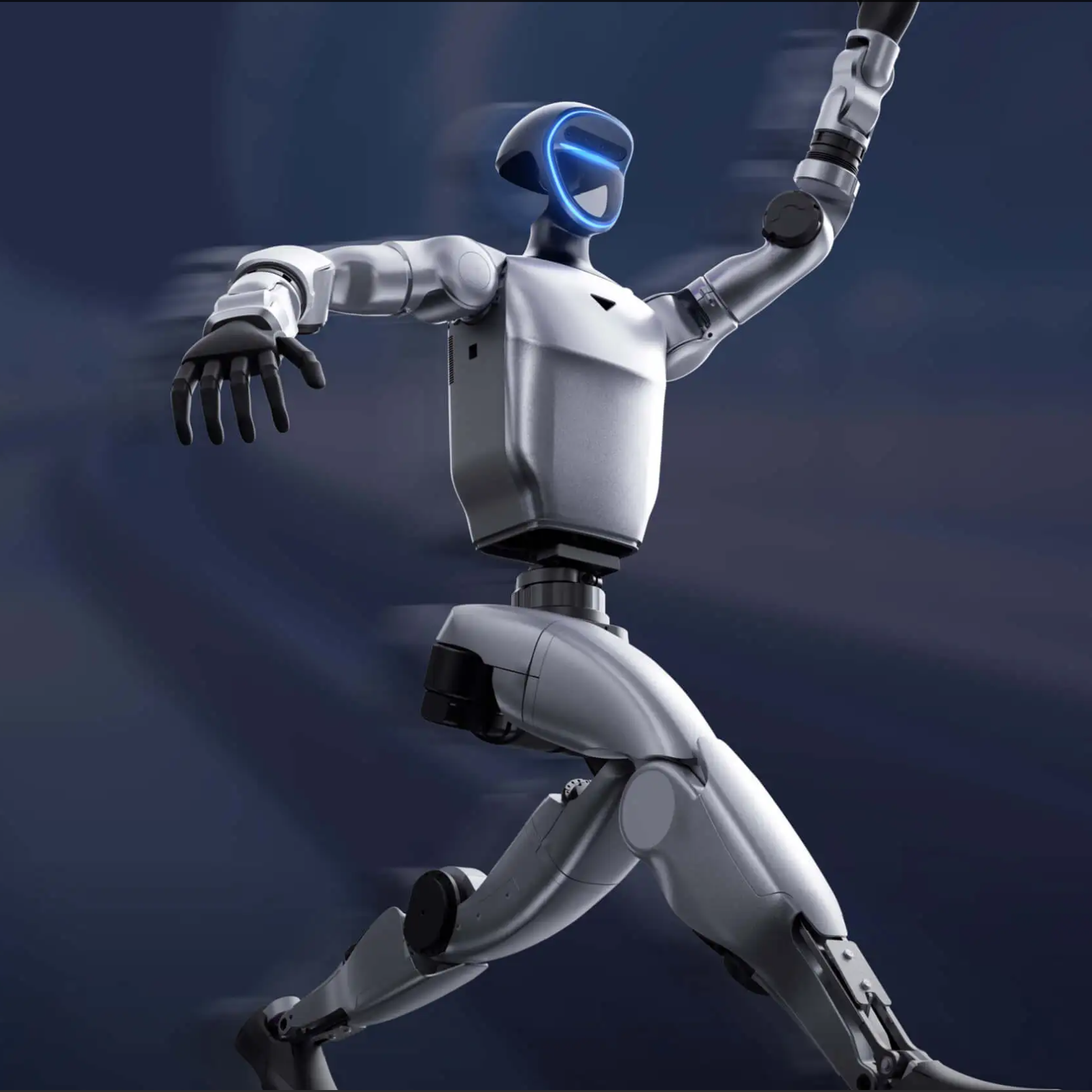 Unitree Robotics
Demo: Sports
Program Schedule
| Time | Event |
|---|---|
| 8:30 - 8:40 | Opening remarks and workshop overview |
| 8:40 - 9:10 | Invited speaker: Mingguo Zhao from Tsinghua University |
| 9:10 - 9:40 | Invited speaker: Guanya Shi from CMU |
| 9:40 - 10:10 | Invited speaker: Peter Stone from Sony AI |
| 10:10 - 10:40 | Invited speaker: Chenhao Liu from Phybot |
| 10:40 - 11:10 | Coffee break + Poster session |
| 11:10 - 11:40 | Invited speaker: Karthik Ramani from Purdue University |
| 11:40 - 12:10 | Demo session by Unitree, Phybot, and Booster |
| 12:10 - 13:30 | Lunch break |
| 13:30 - 14:00 | Invited speaker: Dieter Büchler from Johannes Kepler University |
| 14:00 - 14:30 | Invited speaker: Aude Billard from EPFL |
| 14:30 - 15:00 | Invited speaker: Vikash Kumar from MyoLab AI |
| 15:00 - 15:30 | Poster lightening talk |
| 15:30 - 16:00 | Coffee break + Poster session |
| 16:00 - 17:00 | Panel discussion: Open problems in athletic humanoid robotics |
| 17:00 - 17:20 | Closing remarks and announcement of best poster award |
Contact
For logistics questions, please contact I-Chia Chang at chang970@purdue.edu.
For workshop paper submission questions, please contact Wenxi Chen at chen4803@purdue.edu.